This month we take a look inside the studio of GK Elliott, local Children’s book author, illustrator and print maker.
Can you tell me a little about how you first got into art, and what drove you to become a writer and illustrator?
My brain has always been 100% creative for as long as I can remember. I was very lucky to have a wonderful childhood surrounded by creativity, and both my parents always encouraged me to follow whatever path I was drawn to. My family and circles of people around me were also creative and encouraging. It is about 80% of the reason I am who I am today. The remaining 20% is down to always being a dreamer. I would prefer to dream and aim for something, and it not work, than never know. I suppose you could argue that this goes full circle, and without the environment I grew up in perhaps I wouldn’t be a dreamer either, so full thanks to my parents and surrounding family for the path they set me on!
As a child I always loved to draw and write stories but in my late teens I followed a music dream that would turn out to be the next 25 years of a career. It was a privilege to do it but during the COVID lockdowns, like many of us it forced me to re-assess where I was and after a comment from a close family member about my art, I decided to try a new direction and go back to where my creativity had started by returning to drawing and writing. It is still early days in the dream, but I have loved the path so far. What fascinates me with illustration is how to make a drawing tell a story.
Why did you choose to write Children’s Fiction?
As a young boy I used to love writing stories and coming up with characters that I could pretend to go on adventures with. Most of the time it would be in my garden or local area, and I would imagine my surroundings as an alternative world.
I am still writing stories with exactly the same concept now. I feel the imagination, creativity and possibilities are so much bigger when your story is for children. Imagination is in its true form at this age and your ideas for stories can be as big as you can dream up. It has always been an audience I’ve been inspired by.
I’m currently working on two different stories and one of them – ‘Madeleine Fisk and the Dark Druid’ – is a story based on a portal to an alternative world that she accidentally stumbles on at the end of the garden. I suppose I wrote the original idea for this when I was about 10, but now as an adult I can refine it (but try to keep the imagination of the story closer the age when I first thought about it).
How do you find the inspiration for your stories?
There are several subjects that I’m interested in – adventure, mythology & magic, the ocean, surfing, animals, and nature. All my stories will have at least one of these elements in (but almost all will have adventure as the theme).
I start a story with either a character and a problem they want to solve, or a situation with characters in the middle of it. The story will then develop from there. Sometimes a story will start with just a concept that I’m interested in.
My recently written story, ‘Castle Rock’, is the story of three seagulls that decide that the rock they live on is a bit old and tired, so they decide to move to a different one and that decision creates a series of mini adventures. It was inspired by sitting by the beach in Pembrokeshire and watching three seagulls on a rock and wondering what they were talking about.
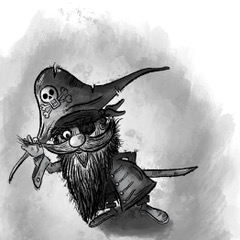
A work in progress – ‘Captain Bushybeard and the Barnacle Breaker’ – is a story that started with the theme of pirates (because it’s a one of my favourite things to illustrate) but I wanted to play with the concept of an ageing pirate with a son who doesn’t want to become a pirate and fulfil his legacy (much to the disappointment of his father). The son is great with technology though and once they realise they can help each other when they work as a team, a whole new adventure begins. The concept was inspired by wondering how an old school pirate would fit into modern day society with the ever-increasing rise in technology, but also exploring the concept of still having value as we age.
Do you sketch first, or dive straight into the drawing? How much planning vs spontaneity is in your work?
Everything starts with a pencil, and shapes and lines to create some sort of flow or life on the page. I then build up from there. Sometimes I let the drawing develop as I go, and other times it can be very much specific idea that I am trying to create (most of my commission-based work), so the drawing will heavily rely on the reference material. Sometimes a daily sketch will become a bigger design, while other times a planned specific drawing will never leave the studio. But it always begins with a pencil sketch.
Which animals inspire the most stories for you?
I’m a huge fan of anything that punches above its weight, breaks stereotypes, and uses animals to convey an entirely different message.
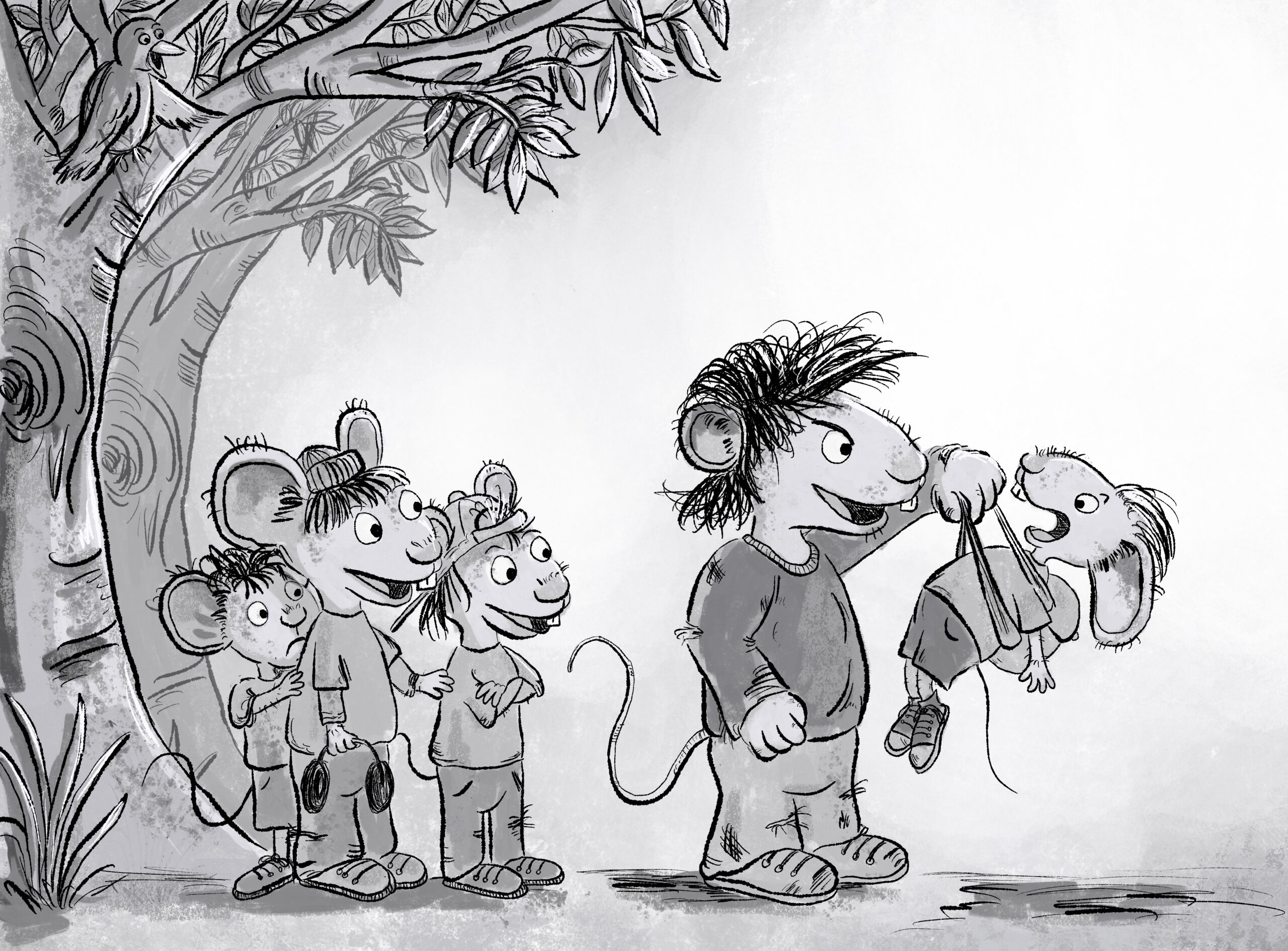
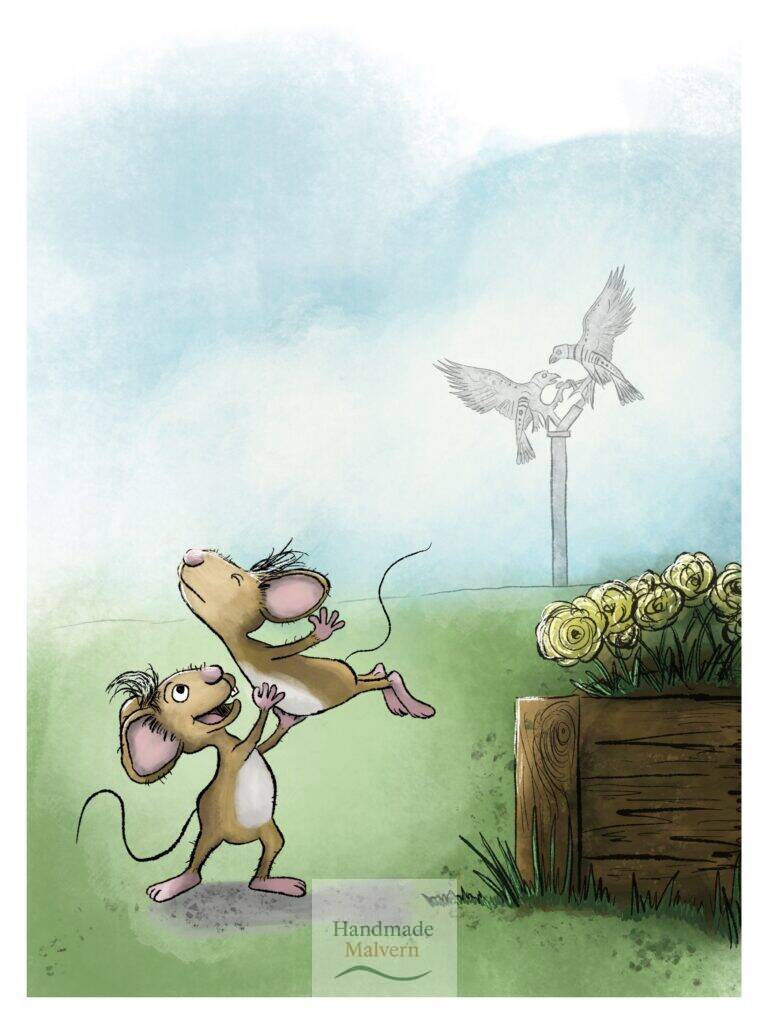
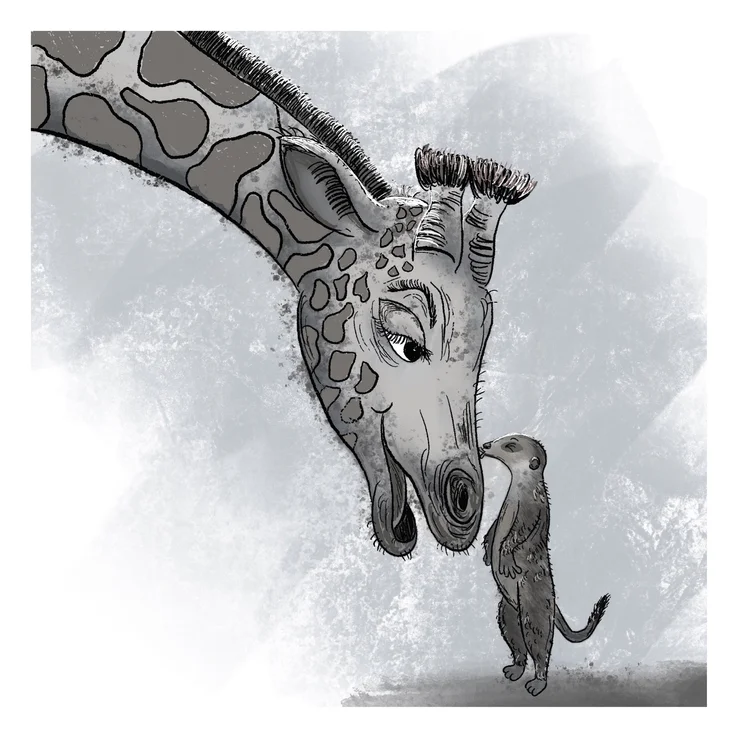
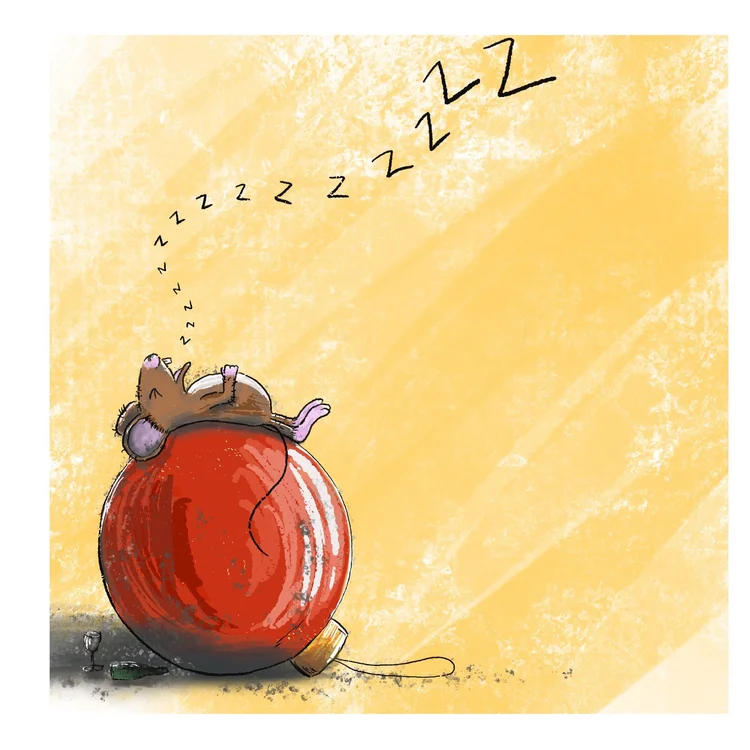
Above all, I love mice and dogs. Mice appeal to me because they embody both ideas: they have to punch above their weight, while challenging the stereotype of being nothing more than pests. Dogs, meanwhile, are, in my opinion, the greatest gift humans have. They are the ultimate example of unconditional love and joy.
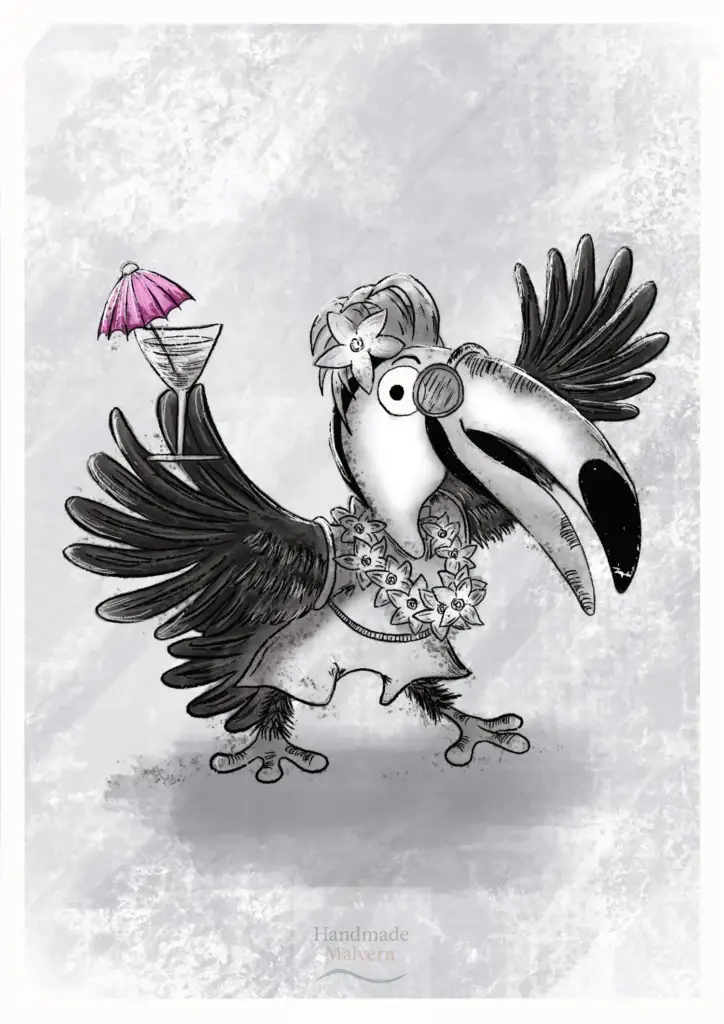
I also have a soft spot for squirrels, and more recently, I’ve fallen deeply in love with birds. But, like stories themselves, I think all animals have something to offer within children’s stories. Under that umbrella, the possibilities are endless—the animal world provides an almost limitless cast of characters, each capable of carrying a completely different story or message.
Can you remember a piece that was particularly difficult to make? What made it challenging, and how did you over come the difficulties?
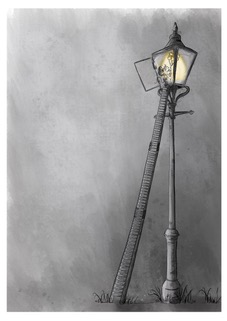
The first time I decided to draw the Malvern Lamppost piece it presented lots of issues. The background needed a lot of texture with pencil shading, and I couldn’t get it to work. I tried different pencils and charcoals and different smudging techniques and couldn’t get a decent balance between the shading and dip pen lines. Either the shading was too light but the ink lines popped, or the shading was too dark and ink lines got lost. In the end, I probably took 3 days of experimenting, but I ended up finding out the method that I have kept ever since. The original number of the lamp post series ended up going to a buyer in Cradley and she sent me a picture of it on the wall once she’d had it framed, and it 100% made up for the challenges I had creating it. I am thankful for the whole process and what I learnt from it.
What is a typical day in your studio like?
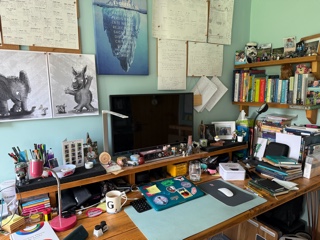
I think this is the best part of what I do now, because I don’t have a typical day! There will certainly be times when the focus is a particular thing, but most of the time my work varies each week. Sometimes each day. Everything is still very new, and I am still trying to kickstart everything, so for about the last 3 years I’ve had too much to do and not enough hours in my week to do it. I am now seeing a pattern for things that I am doing, and I think by next year (2027) all my pillars will be in place and my work will have more of a schedule to it. But always leaving room for time to move a little organically too. I certainly don’t want to be ruled by a calendar but would like a little more structure to riff from.
I am mostly in my studio at home, or in the conservatory for my lino printing. I am in the process of building a workshop in the garden to start working in next year, so I’ll ultimately have two different spaces. Each week, I spend time writing, sketching, designing, carving, doing admin type tasks, researching, and planning teaching workshops. I also practise different techniques such as pencil, dip pen, watercolour, lino carving and digital drawing. This varies every week and is why I love what I do.
How does community and sustainability impact the work you produce?
Community is such an important part of who I am. I am a proud Malvern boy who was lucky enough to grow up here and the landscape has inspired a lot of who I am. My dream would be to see the world made up of thousands of communities that create the people, products and art from that specific area. It is why I love being involved in Handmade Malvern. That is exactly what we are and I’m very proud of it. As humans, we are supposed to be part of tribes and communities. You don’t have to go too far back to see the culture of tribes and communities in Britain either. We are a small island and, in my opinion, being British is all about sharing your life with different people and the different paths they have walked. Accepting and celebrating being part of whatever community you are in is another great gift.
Sustainability is also hugely important to me. If I could, I would use 100% locally sourced and sustainable materials, but I still haven’t found the way to do this. I probably work at somewhere like 80% sustainable and this is largely because of using either paints or a computer to support the work I do. I would love to think that one day, I will have hit 100%.
And do you have any rituals or habits that help you get into the creative mindset?
I don’t have any rituals necessarily. I do like to spend most of my days sat on my favourite bench in the garden with a cuppa listening to the trees, birds and the wind. I am very lucky to say that my brain is always in a creative mindset and thinking of things in a creative way. I do have low energy patches however, and when I struggle to have the ‘gusto’ to work, I will usually revert to the things I know will recharge me. These are simple things that will almost always involve nature from going for a walk, riding a bike or going for a surf. If I am ever struggling in any way, I find the ocean is always my best healer and will always recharge my creative energy.
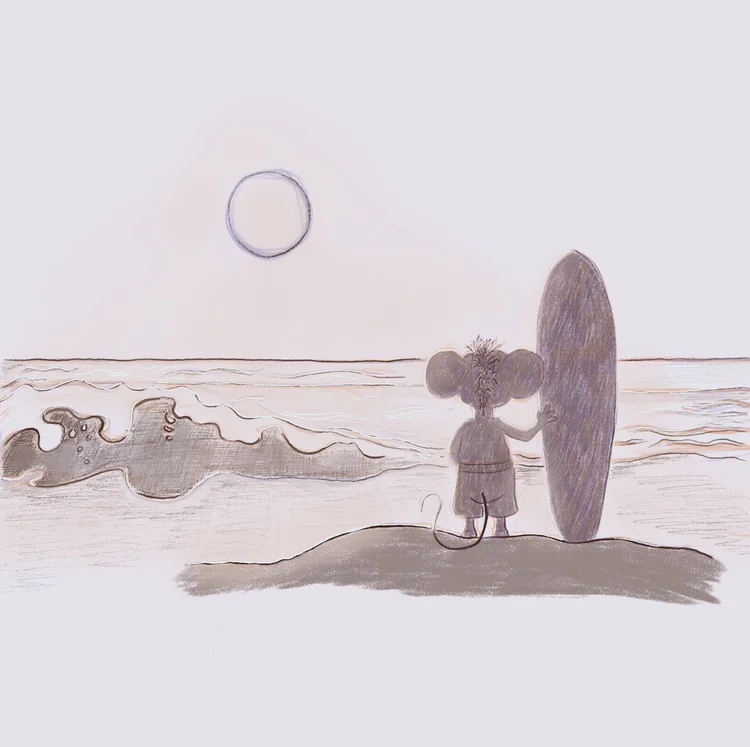
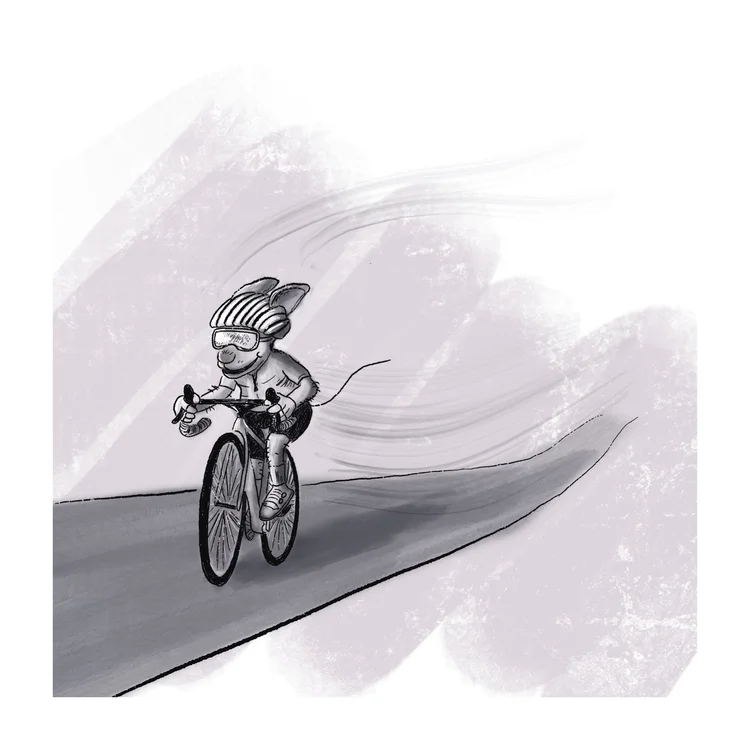
What materials do you like working with?
My favourite method is using a pencil. I absolutely love the depth and possibilities that come with pencil. In fact, I may actually be the pencil’s biggest fan!
I also love watercolour and I love dip pen ink – both for the same reason that although you may have an element of control, the ink is in charge, and you have to go with what it decides, (even if it isn’t in the original plan…). I like the element that what could be seen as a mistake, is something you celebrate in the piece. Some of my worst ‘mistakes’ have added real character to a piece of work.
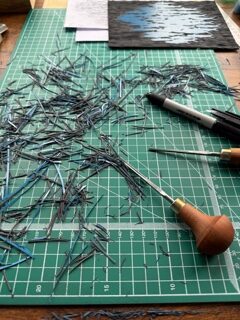
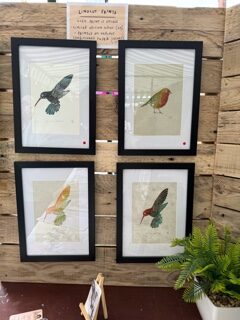
Over the past 12 months I have also fallen deeply in love with lino printing and feel that it will become a significant proportion of my future work. I absolutely love the process, and like the first time I played a bass guitar, I feel like I have connected with something that is already in me somewhere. Like all my work, it still starts with a pencil, but when you get to carving and printing, you are only just getting started! In a world of perfectionism, I feel that by the nature of the process, every print will have some quirky imperfections and therefore be slightly unique. I can’t tell you how much I love this part of it. It is a wonderful mix of excitement (and sometimes fear) each time you carve another line in the block or lift the paper to reveal an inevitable little quirk.
I am also a fan of using different papers. It is remarkable to me the difference it makes using different paper has on the finished piece of work. I have used all sorts in the last few months but the traditional Japanese papers are just such a delight to use.
How does mythology and folklore influence your work? Can you give examples?
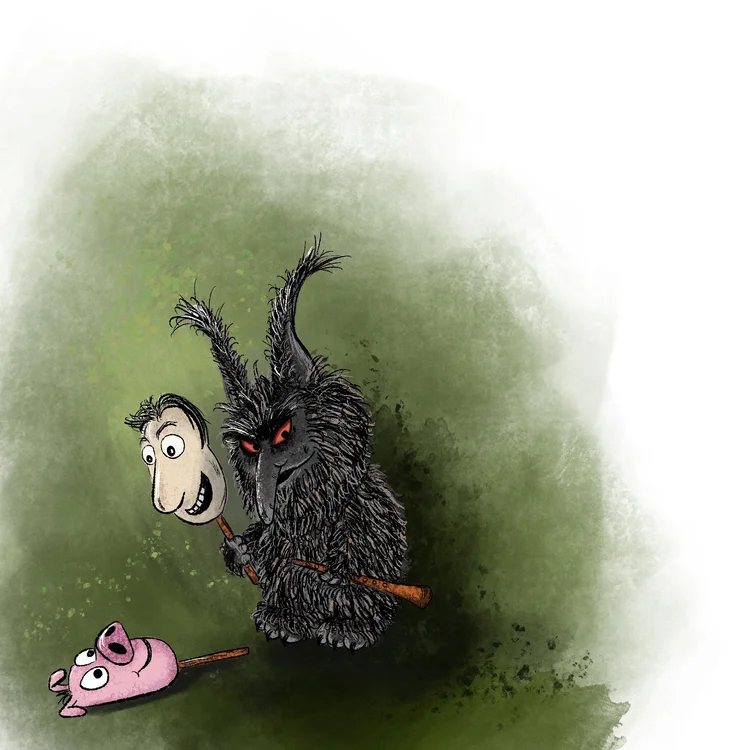
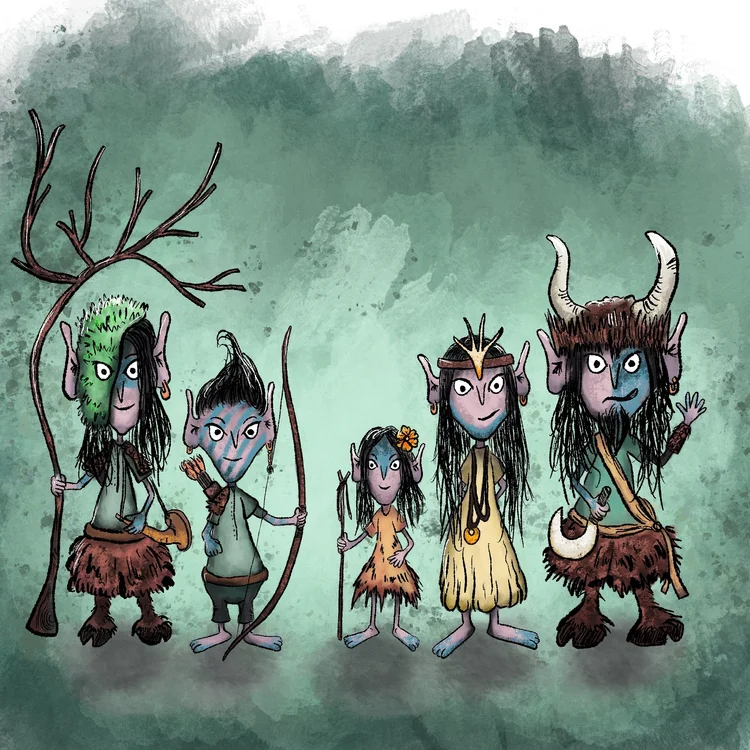
Massively. I am fascinated by Britain and the myths and legends that come from the history of our island. I am fascinated by the old cultures of picts, celts and tribes and how those old ways still appear in modern day. The creatures and myths are all over the country and all can be drawn on for inspiration wherever you go. Just the place names in Britain are inspiring. Locally, places like Howler’s Coppice, Eggs Tump, Pensax Village and Devil’s Leap provide great inspiration for names in stories without having to imagine any elaborate names.
Legends like King Arthur & Robin Hood, The Blue Men of the Minch, The Loch Ness Monster, Selkies, Mermaids and the Kraken, Cornish giants, fairies, elves and goblins are all inspiration for me. There is no doubt that the link to CS Lewis and Tolkien in Malvern has had an impact on me too. Katharine Briggs and her Dictionary of Fairies is always near to my desk when I am writing. The Hidden Life of Trees by Peter Wohlleben, Red Sky at Night by Jane Struthers and The Magical History of Britain by Martin Wall are also books that are also never far away.
I have always believed and been drawn to a world beyond our world, or I suppose a parallel to our world. I believe that on those occasions you feel you are connected to a bigger plain, it is in fact, because you are. It is only as adults that we talk ourselves out of fantasy and myth, because our rational mind becomes our main reference point. It is another reason I enjoy creating art and stories that connect with bigger ideas of a world and have an audience of younger minds where possibility is whatever you can think of, not what you think is believable as an adult.
Where can we next find you exhibiting or selling your work?
Most of my time at the moment is leading up to my nine-day residency at Sorrel & Sage for the Herefordshire Art Week from the 5th to 13th September. I will be showcasing loads of new work and doing a few children’s drawing workshops during each weekend. It is a wonderful place to showcase, surrounded by talented artists and their incredible work. It is also lovely to talk to lots of people about my process, which a lot of the time is on my own.
I am then spending the rest of September working on an exciting commission that I’ve been looking forward to and will finally have some allotted time to create it! It is a full A3 colour illustration for a family that I’ve been itching to get started on.
I also have a craft fair with Two Can Do Markets in Alfrick on the 19th September. You can also buy prints and cards and enquire about commissions via my website.
